

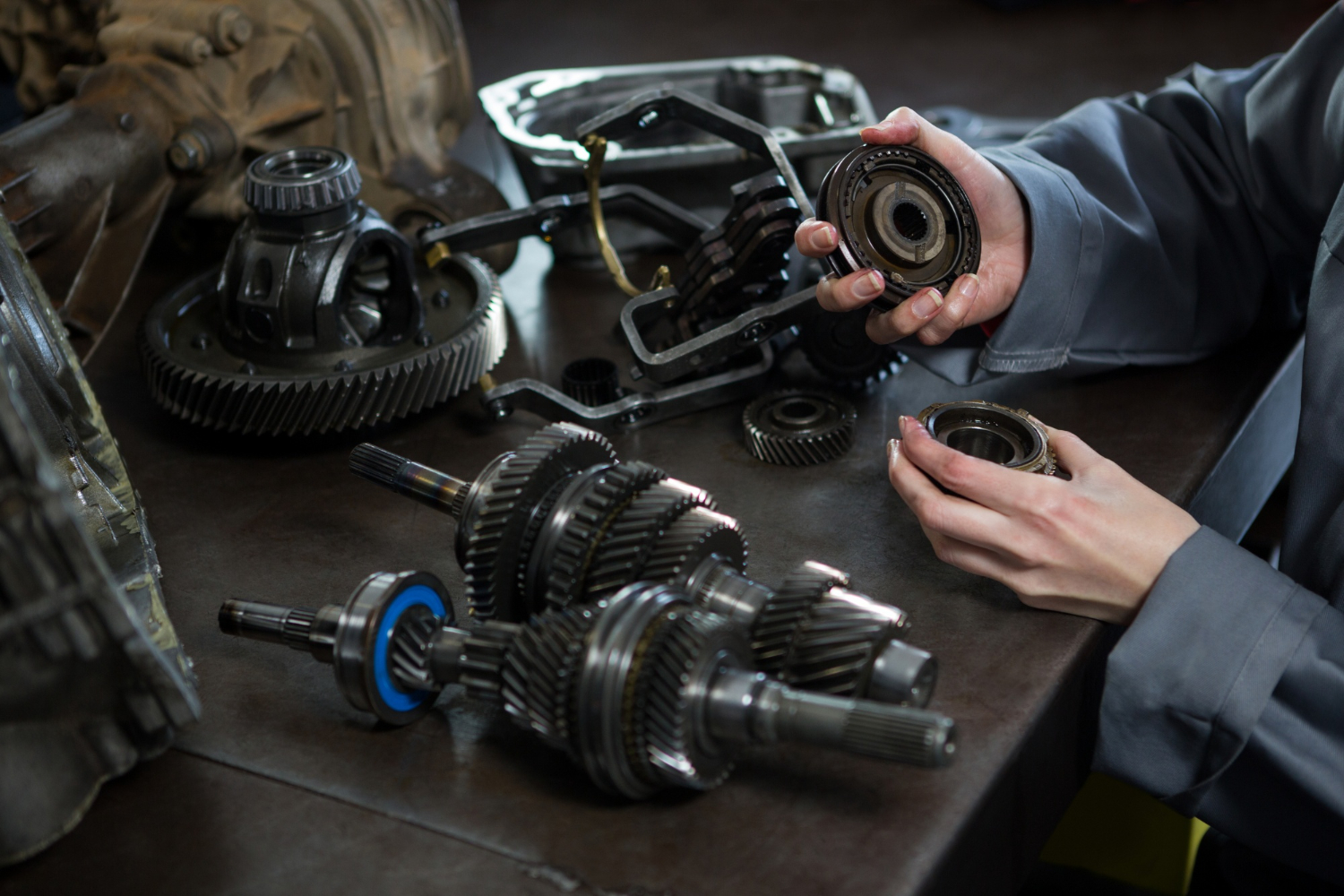
For every car owner in an age of growing gasoline prices and environmental consciousness, maximising the fuel efficiency of a car comes priority. Although driving patterns and routine maintenance influence economy, the engine itself is the main factor determining it. Wear and tear on important internal parts over time lowers performance, which causes greater fuel use and greater emissions. A thorough mechanical procedure called car engine reconditioning fixes this degradation by returning the power unit to its original manufacturer specifications. This rigorous renovation specifically addresses the sources of inefficiency, therefore providing a long-lasting replacement for expensive substitution. Therefore, by correcting the interior defects that silently consume your budget and deplete your tank, investing in properly obtained Reconditioned Engines can be a strategic choice yielding renewed vigour and vastly better miles per gallon (MPG).
Restoring Best Compression
Effective combustion requires engine compression first and foremost. Worn piston rings, cylinders, and valves let fuel-air mixture and pressure leak, hence reducing compression. Incomplete burning, wasted gasoline, and lower power are outcomes of this. Reconditioning entails valve re-seating, replacing piston rings, and re-boring cylinders. This guarantees the greatest force is extracted from every combustion cycle by restoring factory compression ratios. More completely and powerfully burns fuel in a sealed, high-compression chamber, therefore resulting in more distance covered per litre of fuel used.
Atomisation and Precision Fuel Injection
Modern engines depend on accurate fuel distribution. Worn injectors can drizzle, clog, or spray an inaccurate pattern, hence upsetting the fine air-fuel mix. Reconditioning involves testing, cleaning, or replacing fuel injectors to make sure they provide a fine, optimal spray. Perfect atomization guarantees complete mixing with air, therefore producing a cleaner, more thorough burn. This guarantees the calculations of the engine management system are done exactly, a major component in attaining promised fuel efficiency statistics, therefore removing fuel waste from unburnt particles.
Burning and Removal of Oil Polluting
Worn parts, valve guides and piston rings let engine oil seep into the combustion chamber. Along with gasoline, this oil-burning process is referred to as oil burning. It pollutes spark plugs, fouls sensors, and directly wastes fuel as the engine attempts to burn a non-combustible fluid. Complete reconditioning removes oil usage by replacing worn seals and guides. This prevents the fuel charge’s dilution, enabling it to burn purely and effectively and thus reducing pollution and increasing MPG.
Increased cooling and thermal efficiency
The capacity of an engine to regulate heat is really important. Poor warming-up raises fuel consumption, while overheating can deform cylinder heads and blocks. Reconditioning assures the block and head have authentic, flat surfaces for a flawless head gasket seal by addressing cooling system parts. Good heat control helps the engine swap reach and keep its ideal operating temperature. A motor operating at its intended thermal efficiency consumes fuel more efficiently since pre-ignition from hotspots and extreme heat loss do not affect the combustion process.
Restoring engine sensor accuracy management
The Engine Control Unit (ECU) modifies fuel trim based on readings from sensors, including oxygen (O2) and mass airflow (MAF) sensors. An engine with leaks or worn compression offers false information that leads the ECU to over-fuel. Reconditioning the mechanical core lets these sensors read correct conditions. Frequently, reconditioning bundles include testing or replacement of important sensors. This guarantees the ECU receives accurate feedback, which lets it determine the leanest, most effective fuel mixture for every driving circumstance, therefore restoring digital control accuracy.
Less mechanical drag and internal friction
Efficiency’s enemy is friction. Worn bearings, a sludged oil system, and rough cylinder walls generate parasitic drag that saps power and forces the engine to burn more fuel to get over resistance. Reconditioning guarantees cylinders are flawlessly sharpened, replaces worn bearings, and carefully cleans oil galleries. Fresh, premium lubricant glides easily over newly precision-fit components. More of the energy from the fuel may be turned into motion at the wheels rather than wasted as heat and noise inside the engine, thanks to this remarkable decrease in internal mechanical friction.
Valve Action and Improved Timing
Critical is accurate valve timing controlled by the cambelt or chain and tensioners. Opening or closing late valves brought on by a worn timing system will greatly reduce efficiency. Reconditionings call for the replacement of all components in the timing kit. Moreover, with the car, the valve clearances. This guarantees the valves open and close just when necessary fforthe best air intake and exhaust scavenging. Perfect timing improves the volumetric efficiency of the engine, which means it breathes more freely and burns less fuel to generate the same quantity of power.
Conclusion
Car engine restoration is really a great mechanical rejuvenation that specifically addresses the underlying causes of low gas mileage. It returns the engine to its ideal operating integrity by carefully restoring compression, eliminating leaks, minimising friction, and guaranteeing flawless fuel management and timing. The outcome is a power unit that extracts more usable energy from each drop of fuel, therefore lowering emissions, lowering consumption, and restoring driving performance. For vehicle owners confronted with a contracting economy, putting money into a professional reconditioning service or a high-quality engine offers a cost-effective and environmentally friendly solution, providing a new lease on life with real savings at the fuel pump and a greatly reduced environmental footprint.
Visit cthati for more informative blogs.